[Off-Topic] Atlas Shrugged: Is Money the Root of All Evil?
I was introduced to Atlas Shrugged and Ayn Rand for the first time in 2007, by none other than Carl Youngblood. Until then I didn’t know the book or the philosophy of Objectivism. Since then, little by little I’ve been studying it. I’ve read books like The Virtue of Selfishness, one of my favorites. I transcribed 3 passages from Rand’s work in the posts:
- [Off-Topic] The Cult of Gray Morality
- [Off-Topic] Man’s Rights
- [Off-Topic] The Argument from Intimidation
And only this year did I finally put myself to read this enormous work that is Atlas Shrugged. I’m still halfway through and loving the story and the ideas. Objectivism is definitely the philosophy that best describes the way I like to think. If you’re interested I recommend the book Rational Egoism: The Individual from Ayn Rand by the Brazilian Rodrigo Constantino, one of the few national thinkers/writers I like to read frequently.
By chance this year the first part of the film version directed by Paul Johansson should premiere. I particularly liked the choices of Taylor Schilling as Dagny Taggart and Grant Bowler as Henry Rearden, for me he has a bit of Gary Cooper as Howard Roark in the film The Fountainhead, from 1949 which adapts Rand’s book of the same name:
http://www.youtube.com/embed/ooOfe_-5TlY
I was just reading the passage from the book that gets to James Taggart’s wedding, where the character of Francisco D’Anconia, a very rich industrialist and celebrity recognized as a playboy, is questioned by a person at the party:
- Mr. D’Anconia, what do you think will happen to the world?
- Exactly what it deserves.
- Ah, but how cruel you are!
- You don’t believe in moral law, madam? – Francisco asked, very seriously. – I do.
Rearden heard Bertram Scudder, who was outside the group, say to a young lady who had made some sound translating indignation:
- Don’t bother with him. You know, money is the root of all evil, and he is a typical product of money.
Rearden thought Francisco shouldn’t have heard the comment, but saw him turn to them with a very polite smile.
And then begins one of the best speeches I’ve ever read. Francisco goes on about Money. We rarely stop to contemplate things from our day-to-day and money is something we all have, use, earn and lose but for which we have little conscious understanding, and this speech is practically an Ode to Money that I thought it would be good to share to leave you with more desire to read the whole novel.
Below is the full text of Francisco D’Anconia’s speech. And remembering that in English, when talking about “making money” they say “make money.” It’s a difference I hadn’t noticed, but we say “earn” money, but Americans say “make” money. It’s an important difference.
Remember that old question: “Does money bring happiness?” This speech is partly an answer to that, along with the other question “Is money the root of all evil?” Read:
The Money Speech
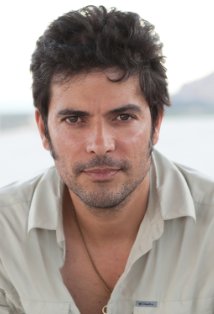
Jsu Garcia as Francisco D’Anconia
So you think money is the root of all evil? Have you ever wondered what the source of money is? Money is a tool of exchange, which can only exist when there are goods produced and men capable of producing them. Money is the material form of the principle that men who want to trade with one another need to exchange a value for another. Money is not the tool of beggars, who plead for products through tears, nor of looters, who take them by force. Money only becomes possible through men who produce. Is that what you consider evil? Who accepts money as payment for his effort only does so because he knows it will be exchanged for the product of someone else’s effort. It’s not beggars or looters who give money its value. Not an ocean of tears nor all the weapons of the world can transform those pieces of paper in your pocket into the bread you need to survive. Those pieces of paper, which should be gold, are pledges of honor; through them you appropriate the energy of men who produce. Your wallet asserts the hope that somewhere in the world around you there are men who do not betray that moral principle that is the source of production? Look at an electric generator and dare to say it was created by the muscular effort of irrational creatures. Try to plant a wheat grain without the knowledge that was bequeathed to you by the men who were the first to plant wheat. Try to obtain food using only physical movements, and you’ll discover that man’s mind is the source of all products and all the wealth that has ever been on earth.
But you say money is made by the strong to the detriment of the weak? What strength are you referring to? It’s not the strength of arms nor of muscles. Wealth is the product of the human capacity to think. So money is made by the man who invents an engine to the detriment of the one who didn’t invent it? Money is made by intelligence to the detriment of the stupid? By the capable to the detriment of the incompetent? By the ambitious to the detriment of the lazy? Money is made – before it can be pocketed by beggars and looters – by the honest effort of every honest man, each in proportion to his capacity. The honest man is one who knows he cannot consume more than he produces. Trading through money is the code of men of good will. Money is based on the axiom that every man is the owner of his mind and his work. Money does not allow any power to prescribe the value of your work, except the voluntary choice of the man who is willing to trade with you his work. Money allows you to obtain in exchange for your products and your work what those products and that work are worth to the men who acquire them, and nothing more. Money only allows business where there is mutual benefit according to the judgment of the voluntary parties.
Money requires the recognition that men need to work for their own benefit, and not to their own detriment; to profit, not to lose; that men are not beasts of burden, that they are not born to bear the burden of misery; that we need to offer them values, not pain; that the common bond between men is not the exchange of suffering, but the exchange of goods. Money requires that you sell not your weakness to human stupidity, but your talent to human reason; requires that you buy not the worst that others offer, but the best that your money can buy. And, when men live by trade – with reason and not by force, as an irrevocable arbiter – it is the best product that wins out, the best performance, the man of best judgment and greatest capacity – and the degree of a man’s productivity is the degree of his reward. This is the code of existence whose instrument and symbol is money. Is that what you consider evil?
But money is just a tool. It can take you where you want, but it cannot replace the driver of the car. It gives you means to satisfy your desires, but it doesn’t create desires for you. Money is the scourge of men who try to invert the law of causality – men who try to replace the mind by kidnapping the products of the mind. Money doesn’t buy happiness for the man who doesn’t know what he wants; it doesn’t give him a code of values if he doesn’t have knowledge about values, and it doesn’t give him a goal, if he doesn’t choose a goal. Money doesn’t buy intelligence for the stupid, nor admiration for the coward, nor respect for the incompetent. The man who tries to buy the brain of someone superior to him to serve him, using money to replace his judgment, ends up a victim of those who are inferior to him. Intelligent men abandon him, but fraudsters and swindlers run to him, attracted by a law he didn’t discover: a man cannot be less than the money he owns. That’s why you consider money evil? Only the man who doesn’t need the inherited fortune deserves to inherit it – the one who would make his fortune anyway, even without inheritance. If an heir is worthy of his inheritance, it serves him; otherwise, it destroys him. But you say money corrupted. Did it really? Or did he corrupt his money? Don’t envy an heir who is worth nothing; his wealth is not his, and you wouldn’t have gotten better use of it. Don’t think it should be distributed; creating fifty parasites instead of one doesn’t revive the dead virtue that created the fortune.
Money is a living power that dies when it moves away from its origin. Money does not serve a mind that is not up to its task. That’s why you consider it evil? Money is your means of survival. The verdict you give to the source of your sustenance is the verdict you give to your own life. If the source is corrupt, you condemn your own existence. Does your money come from fraud? From exploitation of vices and human stupidity? Did you obtain it by serving the insane, hoping they would give you more than your capacity deserves? Lowering your standards of requirement? Doing work you despise for buyers you don’t respect? In this case, your money won’t give you a single moment of happiness. All the things you acquire will be not a tribute to you, but an accusation; not an achievement, but a moment of shame. Then you’ll say that money is evil. Evil because it doesn’t replace your self-love? Evil because it doesn’t allow you to enjoy and indulge in your depravity? Is this the reason for your hatred of money? Money will always be an effect, and nothing will ever replace it in the position of cause. Money is the product of virtue, but it doesn’t give virtue nor redeem vices. Money doesn’t give you what you don’t deserve, neither in material nor spiritual terms. Is this the reason for your hatred of money? Or do you say it’s the love of money that is the root of all evil?
To love a thing is to know and love its nature. To love money is to know and love the fact that money is created by the best force there is within you, your master key that allows you to exchange your effort for the effort of the best men there are. The man who would sell his own soul for a penny is the one who shouts the loudest that he hates money – and he has good reasons to hate it. Those who love money are willing to work to earn it. They know they are capable of deserving it. Here’s a good clue to know men’s character: he who curses money obtains it dishonorably; he who respects it earns it honestly. Run from the man who says money is evil. This statement is the stigma that identifies the looter, just like the bell indicated the leper. As long as men live together on earth and need a means to trade, if they abandon money, the only substitute they will find will be the rifle barrel. But money requires from you the highest virtues, if you want to earn or keep it.
Men who have no courage, pride or self-love, who have no moral conviction that they deserve the money they have and are not willing to defend it as they defend their own lives, men who apologize for being rich – these will not remain rich for long. They are easy prey for swarms of looters who live under the stones for centuries, but who come out of hiding as soon as they smell a man who apologizes for the crime of possessing wealth. Quickly they will rid you of this guilt. Then you will see the rise of men who live a double life – who live by force, but depend on those who live by trade to create the value of the money they loot. These men live off virtue. In a society where there is morality they are the criminals, and the laws are made to protect citizens against them. But when a society creates a category of legitimate criminals and legal looters – men who use force to seize the wealth of disarmed victims – then money transforms into the avenger of those who created it. Such looters think there is no danger in robbing helpless men, after they pass a law that disarms them. But the product of their looting ends up attracting other looters, who loot them as they did to the disarmed men. And so it goes on, always winning not the one who produces more, but the one who is more implacable in his brutality. When the standard is force, the murderer beats the pickpocket. And then this society disappears, amidst ruins and slaughter.
Want to know if this day is approaching? Observe money. Money is the barometer of a society’s virtue. When there is trade not by consent, but by compulsion – when to produce you need to ask permission from men who produce nothing – when money flows to those who don’t sell products, but influence – when men enrich more by bribery and favors than by work, and laws don’t protect the producer from the thief, but the thief from the producer – when corruption is rewarded and honesty becomes a sacrifice – you can be sure that society is doomed. Money is such a noble means of exchange that it doesn’t compete with weapons and doesn’t make concessions to brutality. It doesn’t allow a country to survive if half is property, half is plundered. Whenever destroyers emerge, the first thing they destroy is money, for money protects men and constitutes the basis of moral existence. The destroyers take hold of gold and leave in exchange a pile of false paper. This destroys all objective standards and puts men in the hands of an arbitrary determiner of values. Money was an objective value, equivalent to produced wealth. Paper is a mortgage on nonexistent wealth, sustained by a gun pointed at those who have to produce it. Paper is a check issued by legal looters on an account that isn’t theirs: the virtue of their victims. Careful that one day the check is returned, with the stamp: ‘insufficient funds’. If you make evil your means of survival, you shouldn’t expect men to remain good. You shouldn’t expect them to continue following morality and sacrifice their lives for the benefit of the immoral. You shouldn’t expect them to produce, when production is punished and looting is rewarded. Don’t ask who is destroying the world: it’s you. You live amidst the greatest achievements…
While production was governed by force, and wealth was obtained by conquest, there wasn’t much to conquer. However, over the course of centuries of stagnation and famine, men exalted looters, as sword aristocrats, aristocrats of lineage, aristocrats of the tribune, and despised producers, as slaves, merchants, shopkeepers – industrialists. For the glory of humanity, there was, for the first and only time in history, a money nation – and I know no higher praise of the United States than this, for it means a country of reason, justice, freedom, production, achievement. For the first time, the human mind and money were liberated, and there were no fortunes acquired by conquest, but only by work, and instead of sword men and slaves, emerged the true creator of wealth, the greatest worker, the most elevated type of human being – the self-made man – the American industrialist. If you ask me what the greatest distinction of Americans is, I would choose – because it contains all the others – the fact that Americans were the ones who created the expression “make money.” No other language, no other people ever used these words before, and not “earn money”; before, men always viewed wealth as a static quantity, to be taken, asked for, inherited, shared, looted or obtained as a favor. Americans were the first to understand that wealth has to be created. The expression ‘make money’ summarizes the essence of human morality. But it was precisely because of this expression that Americans were criticized by the rotten cultures of looter continents.
The looters’ mindset made people like you start to view your greatest achievements as a shameful stigma, your prosperity as guilt, your greatest children, the industrialists, as villains, your magnificent factories as product and property of muscular work, the work of slaves driven by whips, as in the construction of the Egyptian pyramids. Corrupted minds that say they don’t see the difference between the power of the dollar and the power of the whip deserve to learn the difference in their own skin, which, I believe, is what will end up happening. As long as people like you don’t discover that money is the source of all good, you will be walking towards your own destruction. When money ceases to be the instrument through which men deal with one another, men become the instruments of men. Blood, whips, weapons – or dollars. Make your choice – there is no other option – and time is running out.
The Critique
I’m sure many feel “strange” reading this. The argument is solid, but the idea seems “wrong.” In the book, right after we have:
Some people had heard, but now moved away, and others said: “It’s horrible!”; “It’s not true!”; “How selfish!”. They spoke at the same time loud and discreetly, as if they wanted those who were next to them to hear, but not Francisco.
- Mr. D’Anconia – said the woman with the earrings -, I don’t agree with you!
- If you can refute just one phrase I said, madam, I would appreciate it.
- Ah, I can’t answer you. I don’t have answers, my mind doesn’t work like that, but I don’t feel that you’re right, therefore I know you’re wrong.
- How do you know that?
- I feel. I don’t follow my head, but my heart. Your logic may be right, but you have no heart.
- Madam, when people are dying of hunger around us, your heart won’t help them anything. And, since I have no heart, I tell you: when you shout “But I didn’t know!”, you will have no forgiveness.
Some may imagine that a character speaking this way, values “money” above all. But that’s not the case in this story and what will happen next is even more surprising. So I recommend you read the whole story ;-)
And this speech is not the whole story. To understand where this is going, complement with John Galt’s speech:
Bonus
In fact, what probably best summarizes what Rand would like to leave with Atlas Shrugged is John Galt’s Speech (Portuguese transcription). Follows – out of context of the novel – to watch:
http://www.youtube.com/embed/U1JiAYJTZJA
There is another version of this concept, in the novel “The Fountainhead.” My next post puts Howard Roark’s speech, which has the same idea as John Galt.